
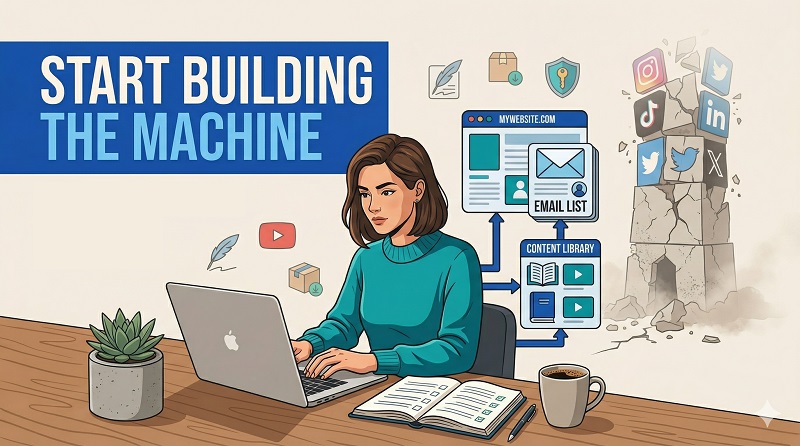
Stop Chasing Side Hustles. Start Building Digital Assets.
Most people who want to "make money online" don't actually build a business. They just give themselves a terrible second job, working for a boss they eventually grow to hate (themselves).
They jump into the newest, sexiest side hustle they see on TikTok. They hustle for a few weeks, realize it's an absolute grind, burn out, and then buy another course hoping the next business model will be the easy one.
Let me save you a massive amount of time, money, and frustration: Stop looking for a side hustle. Start building a digital asset.
A side hustle is trading your time for a few extra bucks. When you stop working, the money stops. A digital asset is a system, a piece of content, or a product that you build once, and it continues to generate traffic, leads, or revenue while you sleep.
Before you spend a single dollar on a domain name or a piece of software, you need to understand the playing field. Here is the unvarnished reality of the most popular online business models, the hidden costs nobody talks about, and how to choose the one that actually fits your life.
The "Rented Land" Models (Dropshipping, E-commerce & Social Selling)
You can make fantastic money on platforms you don't own. I know because I've done it. But you need to understand exactly what you are signing up for.
The Reality Check:
A few years ago, I was making great money dropshipping products on Facebook Marketplace. It was easy to set up, and the cash was flowing. But I didn't own the audience, and I didn't own the traffic. Seemingly overnight, Facebook simply changed their algorithm or throttled my views for some reason. Just like that, the traffic dried up. I went from earning $5000/month on the side to $300 if I was lucky. There wasn't anything I could readily do to fix the issue. I had zero control over it.
I experienced the exact same thing flipping new-release sneakers. It sounded like a fun, lucrative hustle until I found I needed to run multiple virtual private servers, paying exorbitant monthly fees for bot software to actually place the orders, and fighting against hundreds, if not thousands of other people just to secure a single pair of shoes. Interesting use of software, and I learned quite a bit, but the stress wasn't worth it in the long run. I got out of it after only trying it for a couple of months.
The Verdict: Platform-dependent models can work, and some people crush it with them. But if you build your business on Facebook, Amazon, or even Ebay, you are building a house on rented land. The landlord can evict you at any time. If you go this route, I highly recommend you have a backup plan. Find a way to funnel your customers to an email list or a website that you actually own.
The Service Trap (Freelancing & Agencies)
"Start a marketing agency" or "become a freelancer" is the default advice for so many beginners. You learn a skill like graphic design, SEO, or copywriting, and you charge clients for it. Seems simple and straightforward. Until it isn't.
The Reality Check:
I ran a one-man marketing agency for years. I took on white-label work, which meant I wasn't controlling the projects, and I underpriced my services just to secure the business. I sabotaged myself just to have a solid income. While I was doing that, I was still responsible for everything else in my business: client calls, executing all of the work (or at least working with virtual assistants and freelancers - not to mention vetting and hiring), and trying to grow the business. For large chunks of the process, especially when dealing with other small business owners, it felt like dealing with adult toddlers. The money was great overall, but my agency became my life 24/7.
When COVID hit, local businesses panicked, and marketing budgets were the first thing to get slashed. My income vanished in weeks.
On the thought of freelancing, if you go that route on sites like Upwork or Fiverr, you are going to spend your first year racing to the bottom on price, battling overseas competitors who can afford to charge a fraction of what you do. The typical method is to do work almost for free just to get some good reviews and hopefully raise your rates afterwards - if you can sustain it.
The Verdict: Freelancing and client work are fantastic ways to generate immediate cash flow. But unless you build a premium name for yourself, it is a massive grind. Some make a great living doing it; the rest just bang their heads against a wall in frustration as they try everything their told to try to no avail. I've known several people who have made amazing livings running an agency, and I've known some that haven't made more than $500 across several years trying to build their agency.
The Owned Assets (Blogging & Digital Products)
In my opinion, if you want true leverage, you have to own the asset. This is where blogging, building niche websites, and creating digital products (like ebooks, templates, and courses) come in.
The Reality Check:
These models are not get-rich-quick schemes. A new blog can take 6 to 12 months to start generating meaningful organic traffic. Creating a high-quality digital product can take intense, upfront focus. Or, if you're savvy and combine your blog with other sources of traffic (Facebook posts and reels, TikTok, Instagram, etc.), you can start to see meaningful traffic within days or weeks (depending on the quality of your content, of course). This is great while you work on ranking the pages of your site in the search engines.
And here is the magic: Once a blog post is ranking, it can bring in free traffic for years. Once a digital product is created, it costs you exactly $0.00 to duplicate and sell it to the next customer. You have 100% profit margins, no inventory, no supply chain issues, and you own the platform.
The Verdict: If you have patience and the willingness to stick with it, this can be the holy grail. It requires upfront work with delayed gratification, but it is a safe, reliable way to build a sustainable online income.
The "Shiny Object" Wake-Up Call
So, what should you actually build?
Go sit down and honestly think about what you are good at and what you actually like doing. If you hate writing, a blog may not be for you. If you hate customer service or dealing with people, avoid dropshipping and client work. Find what you are passionate about and turn that into your business.
If you want to get started with zero budget, pull out your phone, download CapCut from your app store, and start a video channel. It doesn't have to be professional. Just take imperfect action. With most video platforms, you know your content will at least be seen by a small number of people. If they value your content, it gets shown to more and more which can generate steam and start getting your content seen by hundreds or thousands which can then start sending that meaningful traffic to your website where you can monetize through affiliate offers or your own digital products or even just selling ad space.
But whatever you do, focus.
The biggest reason beginners fail is that they are looking for quick, easy money. They try a business model for two weeks, realize it takes actual effort, and then jump to the next "system." All they are doing is lining the pockets of course creators.
I have bought countless courses over the years. But I don't buy them expecting a miracle; I buy them looking for a small nugget of information or a new perspective I can apply to my existing business. If a shiny new object catches your eye, learn from it, but do not abandon your core model. Pick your path, put your head down, and do the work.
Next Step: You Built It. Now How Do You Get Eyeballs on It?
Building the asset is only phase one. A beautiful blog with a great digital product makes exactly zero dollars if nobody knows it exists.