
The stat that changed how I think about all of this: somewhere between 90 and 95 percent of people who try to make money online never make a single dollar.
Not a living. Not consistent income. Not even enough to cover a monthly streaming subscription. Nothing. Zero. They try, they struggle, they quit, and they walk away with nothing to show for it except a lighter wallet if they bought into someone's course along the way.
I've seen this play out in Facebook groups, in forums, in comment sections, and in my own circle of people who got excited about the same opportunities I did. The energy at the start is always the same: the enthusiasm, the "this time it's going to be different," the conviction that this is the one. And then, one by one, quietly, they disappear.
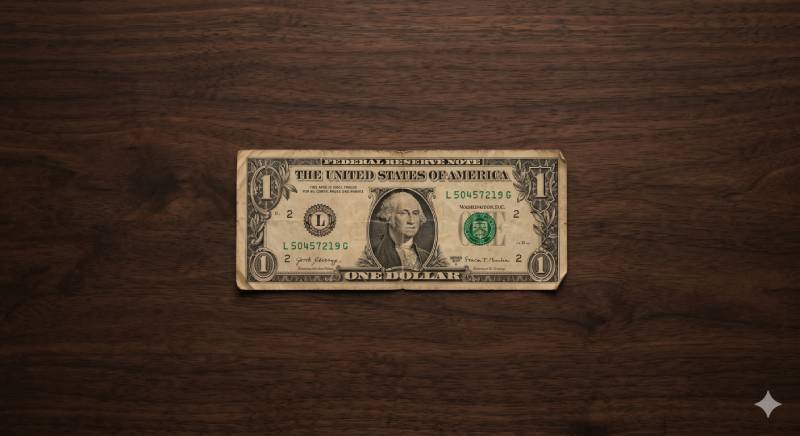
Here's what I want you to understand before you read another word: if you have made even one dollar through any online means (one affiliate commission, one Fiverr gig, one digital download sale, one client payment), you are already ahead of the overwhelming majority of people who have ever tried this. Not ahead of the beginners. Ahead of everyone who tried and quit. That's not a participation trophy. That's a meaningful, demonstrable fact about how hard it actually is to cross that line.
The first dollar is harder than the first thousand. And understanding why is the difference between becoming a statistic and becoming the exception.
What the 90-95% Actually Tells Us
The figure gets cited a lot in affiliate marketing circles specifically, but the pattern holds across virtually every online income model including dropshipping, freelancing, content creation, digital products, agency work... you name it. The vast majority of people who start never see any return.
This isn't because the opportunity isn't real. It's because of what happens between "I'm going to do this" and "I actually did this."
Most people treat online income like a vending machine. You put something in (time, a little money, some effort), and something comes out the other side. When nothing comes out immediately, they assume the machine is broken, or that they picked the wrong machine, or that the people who told them it worked were lying. So they walk away, or they try a different machine, or they spend money on someone who promises their machine is the good one.
What they almost never do is give one thing enough consistent, focused effort to actually see results. Because results, real, meaningful, money-in-your-account results, often take longer than anyone with something to sell you is ever going to honestly tell you.
My First Dollar Almost Didn't Happen
I want to tell you about my first real attempt at building something online, because it is not a success story... at least not the way those usually get told.
I started an SEO agency. I was good at what I did. I knew search, I understood content, and I genuinely believed I could help businesses get found online. My first client came in through a freelancing site back when they weren't completely overrun with foreigners undercutting you to having to offer your services for next to nothing. He needed a website and SEO. I charged him for the website: $500, which felt like a fortune at the time. And I agreed to do the SEO on a "you pay when I get you to page one" basis. With him being my first client, I felt like this was a fair arrangement so he wasn't dropping large sums of money on someone with no history.
I got him to page one. I did the work. Every bit of it. I learned more about his business vertical than I ever wanted to.
He actually drove four hours to take me to lunch. Four hours. We had a great meeting. He seemed enthusiastic. We discussed his increase in volume in calls and what this could mean for his business and mine. I left feeling like I was building something real.
And then I never heard from him again.
Months later, after sending invoices that went ignored and calls that went unreturned, I had a lawyer send him a letter of intent to collect the $10,000 he owed me. He responded by filing for bankruptcy.
That was my introduction to building a business online. Ten thousand dollars in legitimate, completed and billable work. Zero dollars collected. A four-hour lunch that cost me more than I care to calculate.
I could have quit. Every reasonable part of me had grounds to. But I didn't, and the reason I didn't is the reason I'm writing this.
Why That First Dollar Changes Everything
I kept going. I found other clients, slowly, through local business meetings and gig platforms and word of mouth. Eventually I connected with another digital marketing company that brought me on as a white-label operator. They sold the service, I did the work, they looked like heroes to their clients, and I got paid consistently for the first time.
The feeling when that first real, reliable recurring dollar hit, not the $500 website payment that was legitimate, but the first dollar that felt like proof was a combination of validation and something that's harder to name. It was the moment the question "can I actually do this?" got answered with something more convincing than optimism.
That moment is available to you. But here's what most people don't understand about it:
You don't manufacture that moment by finding the perfect opportunity. You manufacture it by staying in the game long enough for the opportunity to find you.
The people in that 5-10% who actually make money online aren't uniformly smarter, better connected, or more talented than the 90-95% who don't. In many cases, the primary difference is that they didn't quit during the period between starting and the first result. That window, the gap between beginning and proof, is where almost everyone leaves.
The Compounding Problem Nobody Talks About
Here's why that window is so brutal: online income doesn't build linearly. It builds in fits and starts, with long flat stretches that feel like failure and sudden jumps that feel like luck. The people who experience those jumps are almost always the ones who stayed through the flat stretches.
Going from $0 to $1 requires building something from nothing. That might be an audience, a reputation, a process, or a client relationship. And you do it all without any external validation that it's working. That's genuinely hard. Most people need feedback to keep going, and in the early stages, the feedback is almost entirely absent.
Going from $1 to $1,000 is still work, but you have proof now. You know the machine isn't broken. You know the model works. You know you can do it because you already did it. Every step after the first dollar has momentum behind it that the first dollar didn't have.
This is why I tell anyone who asks me about building online income the same thing: your goal for the first 90 days isn't to make a living. It's to make a dollar. Just one. A real one, from a real source, in exchange for real value. That dollar is worth more than its face value because of what it proves to you, about you.
What "Treating It Like a Business" Actually Means
You've heard this advice before. Treat your side hustle like a business. It sounds obvious and slightly corporate and not particularly useful until you understand what it's actually saying.
It's saying: show up when you don't feel like it. It's saying: don't pivot every three weeks when something new looks shinier. It's saying: keep records, set expectations with clients, have a contract even when it feels awkward because the client who drove four hours to buy me lunch taught me that enthusiasm is not a payment method.
Most people who fail online aren't failing because they picked the wrong model or used the wrong tools. They're failing because they're treating a business like a lottery ticket. They're waiting for the big hit instead of building the infrastructure that makes consistent results possible.
The good news is that "treating it like a business" has never been more accessible. AI tools have compressed the work. Platforms have lowered the barrier to entry. The information is out there and most of it is free. The only thing that separates the people making money from the people who almost made money is that one group kept going and one group didn't.
Where You Are in This
If you're reading this mid-journey (you've started something, you're putting in the time, and you're not sure whether the return is ever coming), here's what I want you to take from this:
The fact that you're still here puts you ahead of most people who ever tried. The fact that you haven't quit yet means the door is still open. The first dollar is close or it's already happened, and either way, the math is on your side if you stay consistent.
The 90-95% didn't fail because this doesn't work. They failed because they stopped before it had a chance to.
Don't be the 90-95%.