
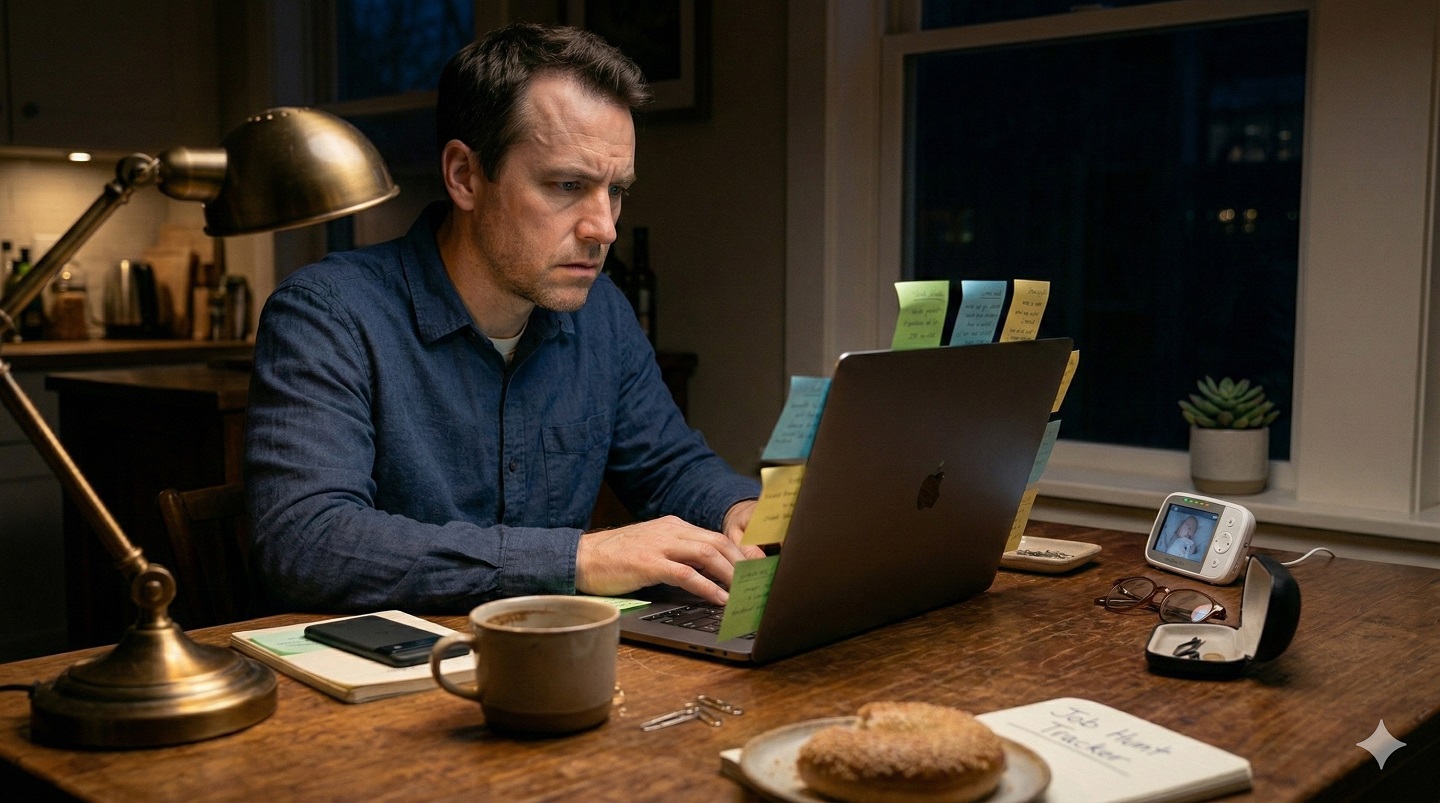
If you spend more than five minutes on LinkedIn or business TikTok, you are going to get hit with the same toxic advice. You will see some self-proclaimed guru aggressively pointing at a camera telling you that "sleep is for the weak" and "if you aren't grinding 24/7, you don't want it bad enough."
I know this trap intimately because I used to live there. "Sleep is for the weak" was practically my personal motto. Pushing for success completely consumed me. I treated sleep like a luxury item that I would finally allow myself to buy once I hit my financial goals.
At first, it actually works. You run on adrenaline and caffeine, and you feel like a highly productive superhero. But your body keeps a ledger of that debt. Eventually, you crash. I hit a wall so hard that I ended up sleeping an entire day away. That forced me to take a massive step back and get on a normal sleep schedule. The painful irony? I quickly realized I was getting significantly more work done in a shorter period of time when I was well-rested compared to my "24/7 grind" days.
The truth is that trying to build a business while working 40 hours a week for someone else is a logistical nightmare. If you try to power through it on sheer willpower and no sleep, you are begging for a mental breakdown.
You can absolutely build a successful side hustle without getting fired from your day job or alienating your family. But it requires ruthless time management, ignoring the fear of missing out, and managing your own expectations. Let's look at how to actually survive the double shift.
Managing Expectations (Rome Was Not Built on a Weekend)
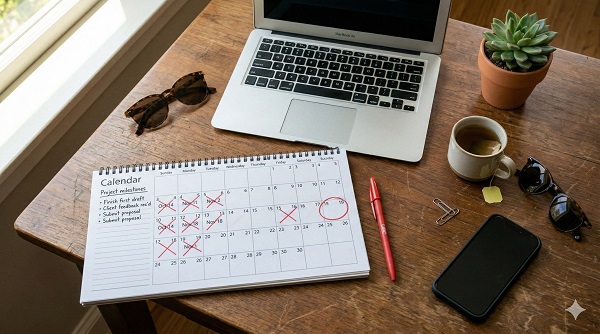
The internet has completely warped our sense of how long it takes to build a profitable business. People see a teenager making six figures drop-shipping novelty socks and suddenly expect their new side hustle to replace their corporate salary in three months.
I learned this lesson the hard way. My very first foray into the world of side hustles was getting dragged into a Multi-Level Marketing scheme. Everything was pitched as super easy, "make money quick," and completely limitless. If the man dragging me into it wasn't eventually going to become my father-in-law, I would have sprinted the other direction.
I bought into the hype. I went through the training. I put in the hours. I even flew out to Denver for a massive in-person networking event.
My total return on investment? Zero dollars and zero cents. I never made a dime. The MLM had based their model heavily around an outdated SEO tactic, and when Google changed their algorithm, the entire scheme collapsed overnight. The people running the show just kind of shrugged and moved on with their lives. I had gotten in at the wrong time, and the reality check was utterly crushing.
The silver lining is that the disaster introduced me to the real mechanics of SEO, which became the foundation of my actual business. But the lesson remained permanent.
A legitimate side hustle is a marathon, not a lottery ticket. You have to remember that you are working with a fraction of the time that a full-time entrepreneur has. If someone doing this full-time takes a year to hit a revenue milestone, it might take you two years working on nights and weekends.
Growth may be slow. Your first few sales or clients may be hard to land. You will face setbacks. If you accept that reality on day one, you won't throw your laptop out the window when you aren't a millionaire by month three.
The Magic of Time Blocking (Stop "Finding" Time)
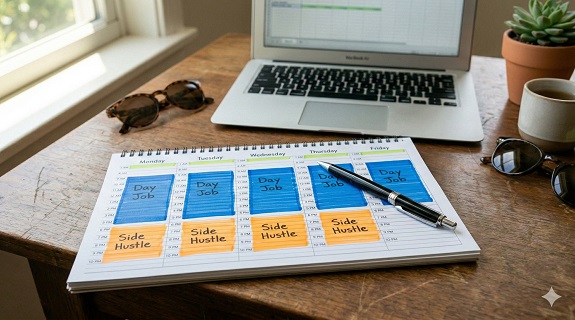
Let's kill a popular myth right now. You are never going to "find" time to work on your side hustle. Time is not hiding under your couch cushions waiting to be discovered. If you wait until you have some free time at the end of the day, you will end up watching Netflix on the couch for three hours.
You have to carve time out of your schedule with a machete.
My wife and I both work from home, and we have a toddler running around the house. If we don't actively block out our schedules, absolutely nothing gets done. My day job requires me to be available from roughly 8:00 AM to 4:00 PM. Since a toddler does not respect standard business hours, we had to get strategic about our quiet time.
My wife takes the early morning shift to work on her projects before the house wakes up. I am a night owl, so I do the bulk of my side hustle work late at night after my son goes to sleep. Some days, if the late nights catch up to me, I have to sneak in a mid-day nap while my toddler is napping just to keep my brain functioning.
It is not glamorous. It is definitely not the "wake up at 4:00 AM and take a cold plunge" routine that tech bros brag about online. But it is a rigid, blocked schedule that fits my actual life. Figure out when your brain works best, block off those exact hours on your calendar, and defend that time aggressively.
Protecting the Golden Goose (Your 9-to-5)
There is a dangerous trend of side-hustlers treating their day jobs with open contempt. They use company time to answer personal emails, they use company laptops to design their logos, and their actual work performance tanks.
This is an incredibly stupid business strategy. Your 9-to-5 is the angel investor funding your side hustle. It puts food on your table and keeps the lights on while your new venture is trying to find its footing. You do not bite the hand that feeds you.
I have a very flexible work-from-home setup, but I follow one unbreakable rule. Take care of what pays the bills first.
Recently, I was away for the first week of the month. When I got back, my second week was entirely consumed by putting out fires and responding to urgent issues. By the time the dust settled, I had exactly ten workdays left in the month to handle the monthly deliverables for 25 different accounts. It was completely daunting.
Do you know what happened to my side hustle during that crunch? It completely vanished. I pushed every single side project off my desk until the primary work was finished. I did not try to juggle both. I did not try to split my focus. I handled the job that keeps a roof over my family's head first.
If you want to survive the double shift, you need absolute boundaries. Do your day job exceptionally well, clock out, and then pivot to your side business. If you try to mix them, you will eventually fail at both.
The FOMO Factor: You Cannot Do It All
Let’s talk about sacrifice, because nobody building a successful side hustle gets there without giving something up. If you think you can work a 9-to-5, build a profitable business, attend every social event, and keep up with your hobbies, you are lying to yourself.
When I first started out years ago, I wasn't working a traditional job. I had endless free time, which made launching my first agency relatively painless. Then COVID hit, and I lost every single client. Around the same time, my son was born, and I had to make a brutal decision. I could try to rebuild the agency, knowing it would consume every waking hour, or I could take a remote job that paid the bills and actually let me be present for my family.
I took the job. It was a massive win for my family time. But eventually, my wife and I realized we wanted more out of life, which meant diving back into the side hustle grind.
This is where the late nights I mentioned earlier come into play. But it also required a massive trade-off. I used to be an avid gamer. I spent a lot of my free time playing video games. I had to almost completely give that up. I traded the controller for a keyboard because the goals I have for my family are more important than saving distant lands, winning a race, or scoring one more goal.
Does it suck sometimes? Absolutely. Managing the Fear Of Missing Out (FOMO) is a daily exercise. But here is the secret: sacrifices are not permanent. Once my side ventures hit a certain revenue threshold, I can leave the day job, scale the business, and reclaim my hobbies. Success requires short-term sacrifice for long-term freedom.
Recognizing and Dodging Burnout
If you push too hard for too long, your brain will simply shut off the power to the building. Self-care in this context does not mean lighting a candle and taking a bubble bath. It means recognizing the warning signs before you completely redline.
For me, burnout doesn't look like an explosive meltdown. It looks like paralysis. I will sit in my chair, stare at a blank computer screen, and get completely lost in thought without typing a single word. I lose the ability to make simple decisions, so I end up doing absolutely nothing. Sometimes it makes me a little cranky, but mostly, it just causes me to waste an entire day of potential productivity.
If you feel that paralysis creeping in, you have to step away from the desk. You cannot push through it.
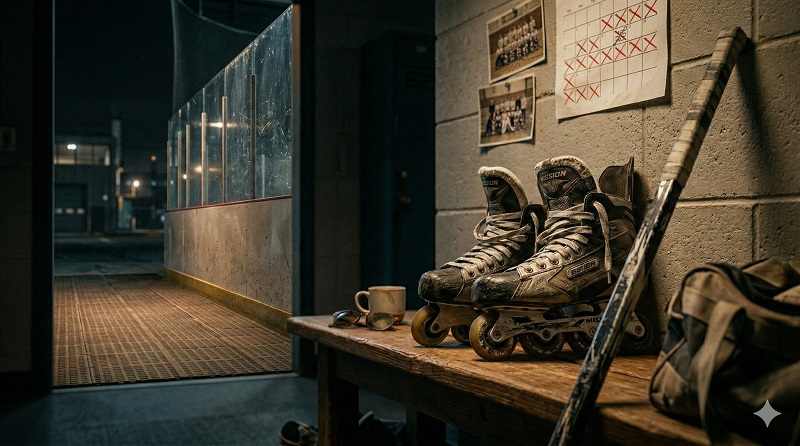
You need a physical outlet that forces your brain to detach from the internet. For me, that outlet is playing roller hockey. When I step onto the rink, the stress evaporates. My entire world shrinks down to the game in front of me, and nothing else matters. In fact, it became such a vital pressure release valve for my mental health that I joined a second league over an hour away just to guarantee I get that steam out.
If your hobby is your only true outlet for stress, do not sacrifice it. Find something that requires your total physical focus, and make it a non-negotiable part of your schedule.
Play the Long Game
Balancing a day job and a side hustle is a grind. There is no magical software or productivity hack that will make working 60 hours a week feel like a vacation.
But it is entirely doable if you drop the toxic "hustle culture" mindset. Protect your 9-to-5 because it is funding your future. Block your time like your life depends on it. Accept that your growth will be slower than the full-time entrepreneurs you see online, and be willing to trade temporary comforts for long-term wins.
Most importantly, protect your sanity. If you burn out, your business stops moving. Play the long game, get some sleep, and eventually, you won't have to work that double shift anymore.